It has been a while since I last posted, but I’m back with (perhaps) renewed vigor. I’ve got quite a backlog of pictures to post, but I want to resume posting with three recent additions to my birding life list.
I find two interesting aspects of seeing new species. The first is knowing that the species exists, but wondering if I would ever recognize it—or be able to differentiate it from its similars. The other is: when seeing a new species in the field, I then wonder if I’m actually seeing something new, or just minor variation on a species I know already. In the case of these three birds, I had both questions, but gratifyingly, there’s no doubt that I’ll be able to distinguish them from other birds if I ever see them again.
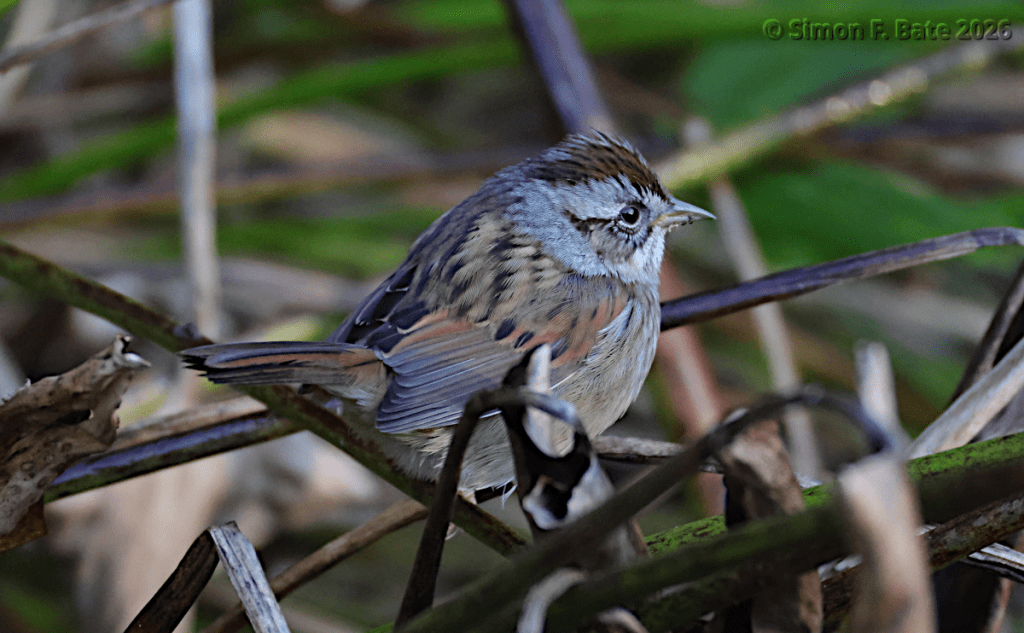
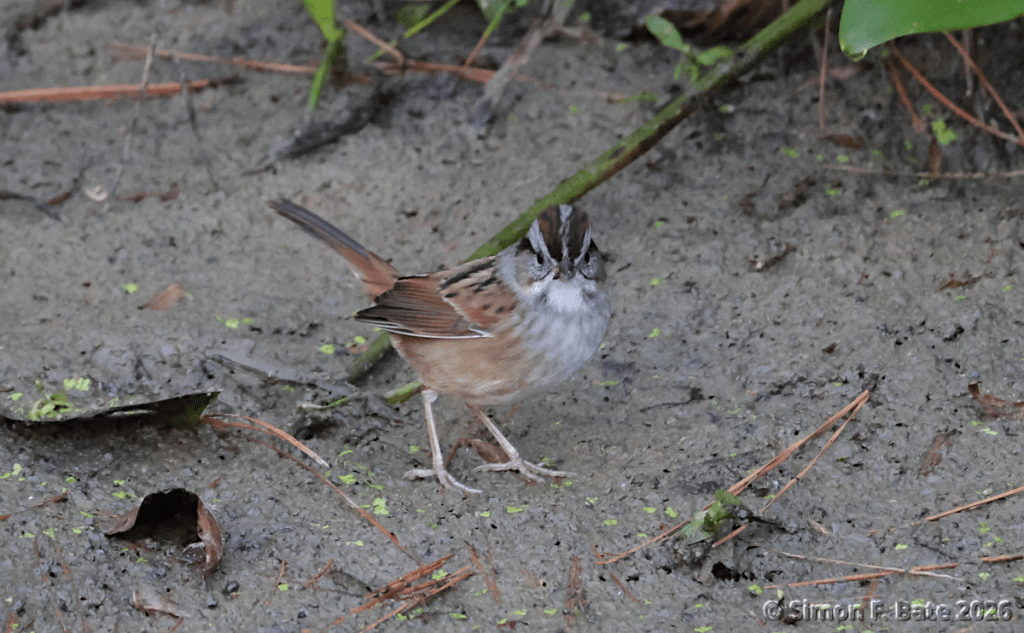
In October, just as the White-throated Sparrows were starting to return, I saw a sparrow on the edge of the retention pond that immediately caught my eye. It’s throat markings were very close to those of the White-throated Sparrow, but its back had colors and shades not seen on the White-throated. I took a few pictures and went back to my bird books (and Merlin*). The new bird was a Swamp Sparrow. In addition to the colors on the back, the Swamp Sparrow has a more erect posture than the White-throated.
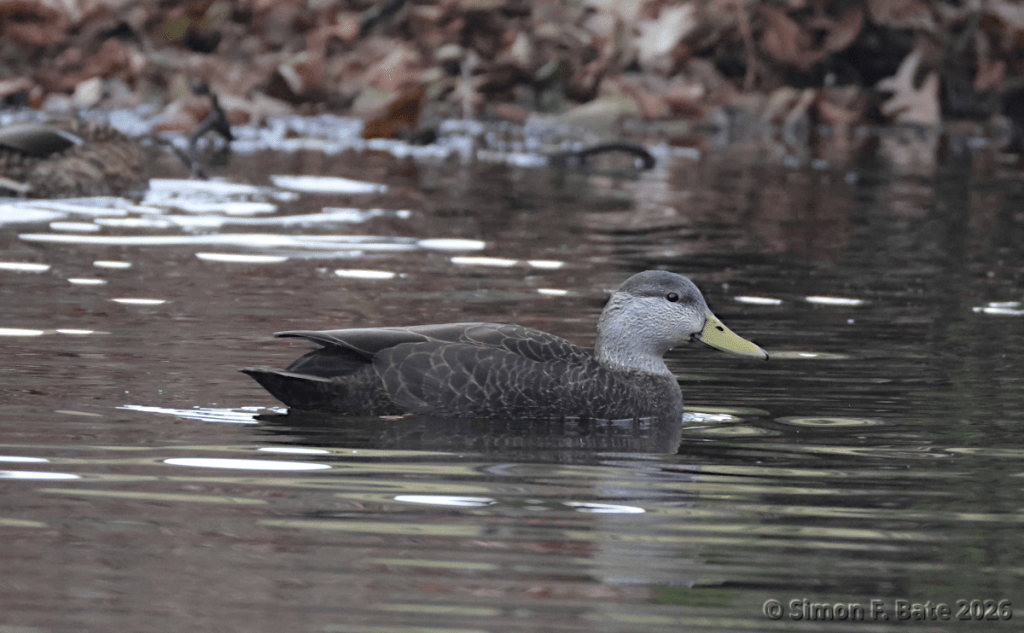
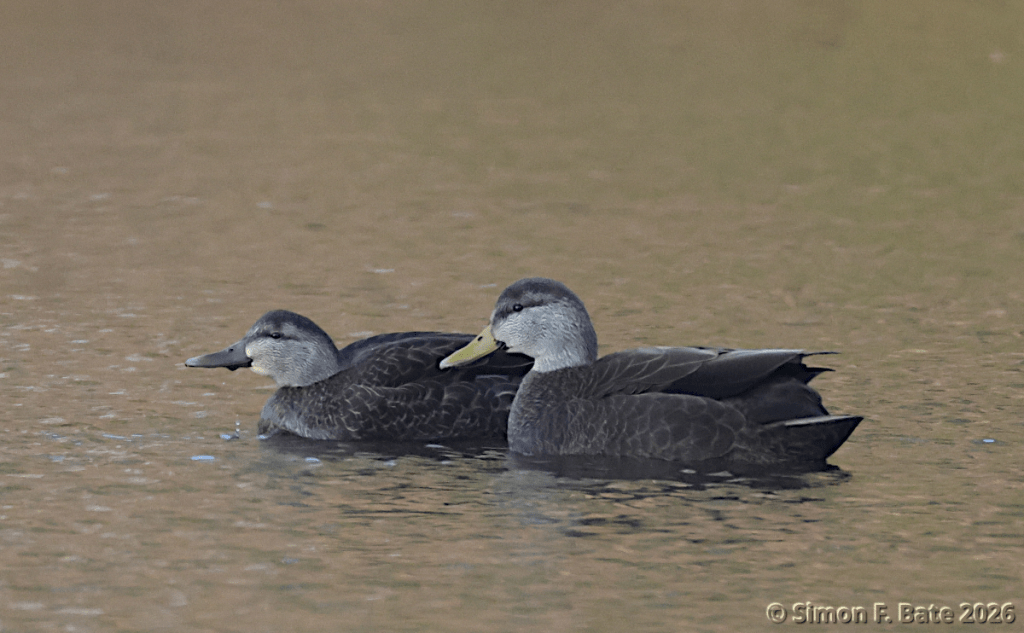
In December I started noticing a pair of ducks that were associating with the usual collection of Mallards often found on the pond. These ducks were similar in appearance to a female Mallard, including with the bright blue speculum on the wing. But these were overall much darker than the Mallards. It also seemed that the pair was male and female, because their bills differed in color. Mallards are known to hybridize with a number of other ducks, so my initial assumption was that the pair I was seeing were Mallard x ? hybrids.
But as they appeared over the course of a couple of weeks, I started to wonder if I was seeing something different. As with the Swamp Sparrow, I took some pictures, when back to my bird books, and consulted Merlin. I was pleased to find that they weren’t hybrids, but were American Black Ducks. They hung around for a couple more days after I made the identification, but then flew off. I haven’t seen them since.
The last bird for today’s post is a Sharp-shinned Hawk. I’ve been reading for years how difficult the Sharp-shinned is to distinguish from Cooper’s Hawks. I see Cooper’s Hawks around the pond and environs relatively frequently, so I’m fairly familiar with their markings and size.
Once again, by the retention pond I saw a Cardinal being chased by another bird. The Cardinal shook off its pursuer and disappeared. But the other bird paused on the other side of the pond. I saw the long tail with broad stripes that typifies both the Cooper’s Hawk and the Sharp-shinned Hawk. But this bird was clearly smaller than the Cooper’s Hawks that I usually see. It also had a more rounded head and slightly different coloration. I was lucky enough to be able to get some pictures before it took off. I had a good idea what I had seen, and Merlin confirmed it: Sharp-shinned Hawk.
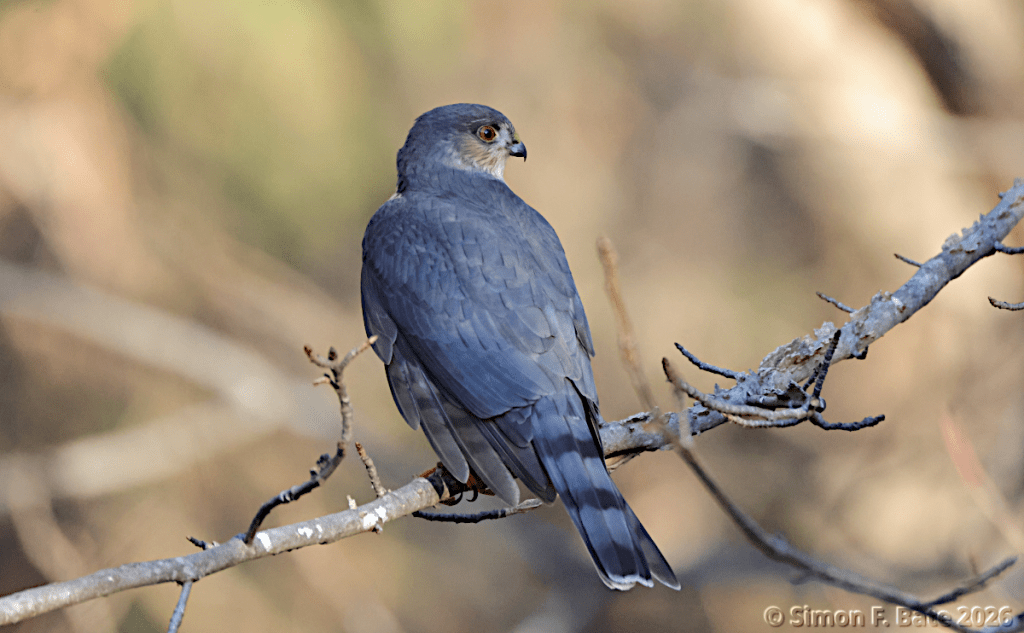
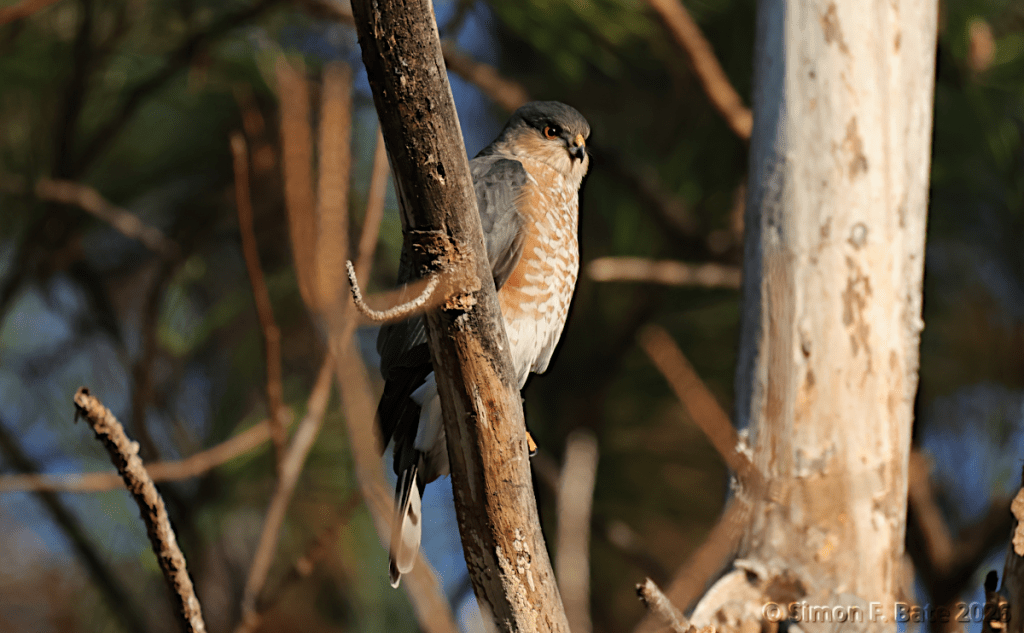
I saw the “sharpie” again a few days later. It flew right above me. Again I noticed the long tail with broad stripes. But now, armed with the knowledge of my encounter, I was able to pick up on the smaller size and recognize what it was.
What are your experiences with seeing new species?
If you like something here, let me know. Follow the blog for updates! Share the URL with your friends!
* Merlin is an amazing free app from the Cornell Lab of Ornithology. It is able to identify birds by their songs, and can also identify birds from your pictures. If you haven’t downloaded it yet, I strongly recommend that you do!
 Seagroves Walks
Simon, I finally had a chance to sit and read this. Very nice post!!
Jo
LikeLiked by 1 person